

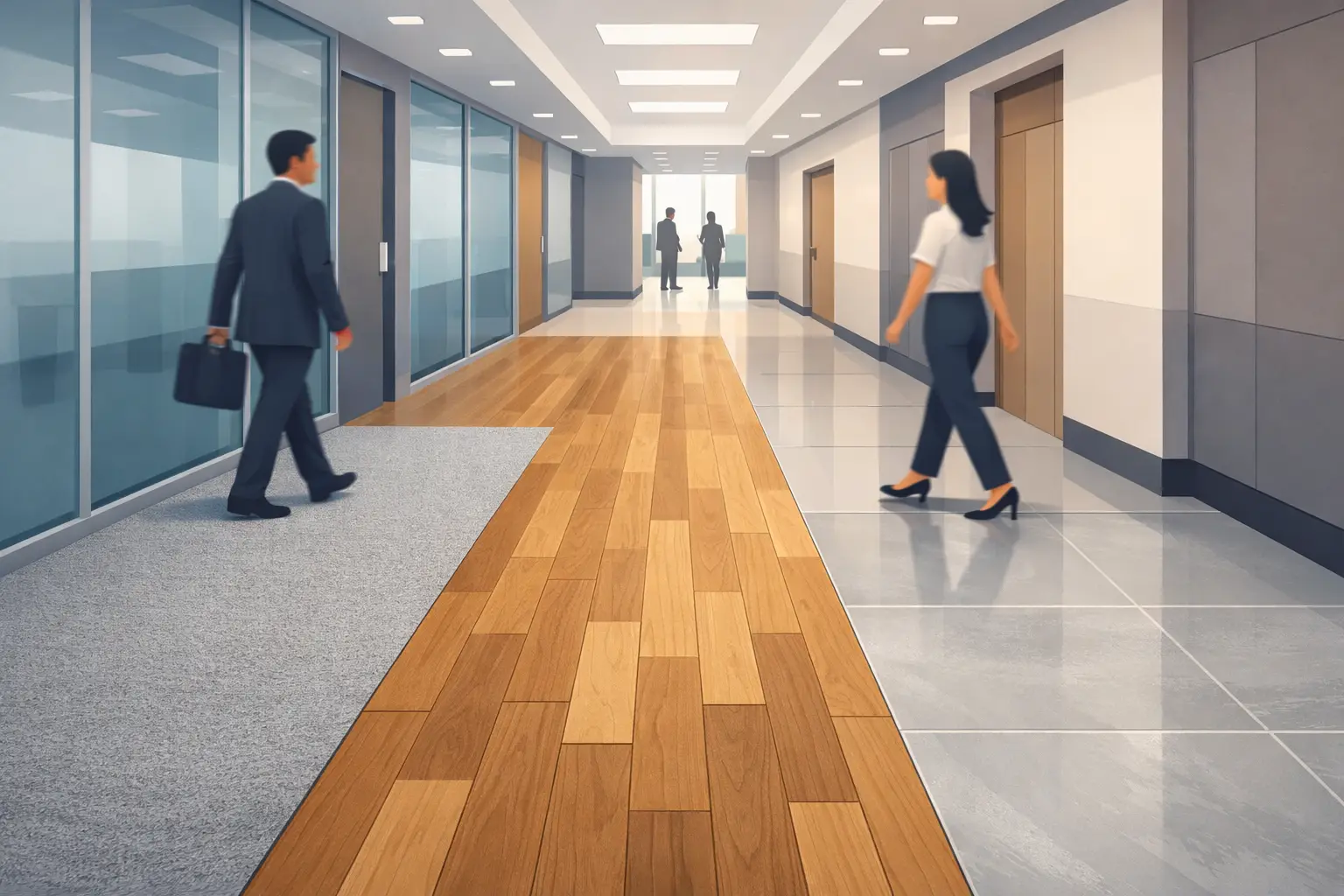
A corridor usually shows flooring failure before any other part of a building. Scuff marks build up near doorways, grit gets carried in from outside, trolley wheels create wear lines, and cleaning routines slowly expose weak materials. That is why choosing the best flooring for high traffic corridors is less about appearance in a showroom and more about how the surface performs after months of constant use.
In practical terms, the right corridor flooring needs to do four things well. It must resist wear, stay safe underfoot, clean up easily, and still look presentable once the building is fully occupied. For homes, offices, schools, healthcare settings and commercial premises in Malaysia, that usually means balancing durability with maintenance, acoustic comfort and installation method rather than chasing one single “best” material for every project.
What matters most in high traffic corridors
The first question is not which finish looks best. It is how the corridor is used. A residential hallway has different demands from a hospital linkway or an office circulation path. Footfall volume, wheeled traffic, moisture exposure, cleaning chemicals and expected lifespan all affect the right choice.
Subfloor condition matters too. Some materials tolerate minor imperfections better than others, while certain systems need a very flat and dry base to avoid movement, edge lifting or premature wear. In refurbishment projects, installation speed can also become a deciding factor, especially when access must remain open.
The most reliable specifications usually come from looking at the corridor as a working environment, not just as a design element. That is where many flooring decisions go right or wrong.
Best flooring for high traffic corridors by material
Vinyl flooring - practical and dependable
Vinyl flooring is often one of the strongest all-round options for busy corridors. It offers good wear resistance, simple maintenance and a wide visual range, including timber, stone and contemporary commercial finishes. In offices, retail units, education spaces and residential common areas, vinyl performs well because it handles regular foot traffic without demanding complex upkeep.
The key difference is quality. A light-duty vinyl product may look suitable at first but wear quickly in busy areas. For corridors, the wear layer and product grade matter more than colour or pattern. A properly specified commercial-grade vinyl will usually outperform cheaper alternatives over time.
Vinyl also helps where hygiene and routine cleaning are priorities. Smooth surfaces can be cleaned efficiently, and certain systems are well suited to institutional environments. The trade-off is that softer vinyl may be more vulnerable to indentation from heavy point loads if the wrong product is chosen.
SPC flooring - stable and hard-wearing
SPC flooring has become a popular corridor solution because of its rigid core construction, dimensional stability and durability. In environments where temperature changes, daily traffic and straightforward maintenance are part of the brief, SPC is often a strong candidate.
Compared with traditional click flooring options, SPC generally feels more solid underfoot and resists movement well when correctly installed. It also offers good surface toughness for busy residential and commercial interiors. For many property managers and fit-out teams, that makes it a practical choice where speed of installation and performance both matter.
That said, SPC is not automatically the answer for every corridor. Some products can feel harder and slightly noisier underfoot than other resilient surfaces, so acoustic expectations should be considered early. Product quality and underlay specification also make a real difference.
Carpet tiles - best where noise control matters
For office corridors, hotel circulation spaces and some institutional interiors, carpet tiles can be a very effective option. Their biggest advantage is acoustic performance. They soften footfall noise, improve perceived comfort and help corridors feel less harsh, which can matter in workplaces and public buildings.
Carpet tiles are also practical from a maintenance point of view because individual damaged sections can be replaced without lifting the entire floor. In corridors with directional traffic patterns, this can extend the life of the overall installation.
The limitation is obvious - carpet is not ideal where moisture, heavy soil ingress or strict hygiene requirements dominate. Entrance-adjacent corridors and wet-prone areas often need a different finish or a carefully planned transition system. Cleaning standards also need to be realistic, not assumed.
Laminate flooring - suitable in selected dry interiors
Laminate flooring can work in moderate to busy corridors, particularly in residential settings or lighter commercial interiors where a timber look is wanted at a lower cost than real wood. Modern laminates offer good scratch resistance and visual consistency, and some perform better than many people expect.
However, laminate is only as good as the specification and installation behind it. In truly high-traffic commercial corridors, especially where moisture control is uncertain, laminate can be less forgiving than vinyl or SPC. Edge swelling and joint wear remain concerns if the wrong product is installed or the subfloor conditions are poor.
For that reason, laminate is often best viewed as a value-driven option for dry, controlled environments rather than a universal answer for every corridor.
Engineered wood and timber - best for prestige, with conditions
Real wood flooring brings warmth and character that few other materials can match. In higher-end residential corridors, hospitality spaces and selected commercial interiors, engineered wood can create a strong first impression while offering better stability than solid timber.
But wood in high traffic corridors is always a considered decision. It will show wear differently from resilient flooring, and that is not necessarily a flaw. Some clients accept that natural patina is part of the appeal. Others want a surface that stays visually uniform with minimal intervention, in which case wood may not be the best fit.
Engineered wood is generally the more practical choice than solid timber for corridor applications because of its layered construction. Even so, finish type, maintenance regime and expected traffic should be discussed honestly from the outset.
Matching the flooring to the corridor type
In residential corridors, comfort and appearance usually sit alongside durability. SPC, vinyl and engineered wood are common choices depending on budget and design goals. If children, pets or frequent wet footwear are part of daily life, resilient flooring often gives better long-term convenience.
In office corridors, carpet tiles, vinyl and SPC are usually the strongest candidates. Carpet tiles help with acoustics, while vinyl and SPC support easier cleaning and stronger resistance to rolling traffic. The right answer depends on whether the space prioritises sound control, sharp aesthetics or maintenance efficiency.
For schools, clinics and commercial buildings, durability and hygiene tend to lead the specification. Vinyl and SPC often stand out here, provided the selected product is suitable for the traffic level and cleaning routine. Hospitals and healthcare spaces may also require more specific surface performance criteria than a standard office corridor.
Common mistakes when choosing corridor flooring
One of the most common mistakes is choosing based on showroom appearance alone. A floor that looks excellent in a sample board may not be suitable once exposed to grit, cleaning chemicals and repeated daily traffic.
Another is underestimating installation quality. Even the best flooring for high traffic corridors can fail early if the subfloor is uneven, damp or badly prepared. Joint integrity, adhesive choice, edge finishing and transition detailing all affect long-term performance.
There is also a tendency to think only about material cost, not lifecycle cost. A lower upfront price can become expensive if the floor needs early replacement, intensive maintenance or disruptive repairs. In many projects, the better value option is the one that stays serviceable and presentable for longer.
How to make the right specification decision
The most effective approach is to start with the traffic profile and maintenance reality. Ask how many people use the corridor, whether trolleys or wheeled chairs are involved, how often cleaning takes place, and what level of visual wear is acceptable over time.
Then consider the environment itself. Is there moisture risk from entrances or washrooms nearby? Is acoustic control important? Does the project require quick installation or phased refurbishment? These questions usually narrow the shortlist quickly.
Finally, match the product to the level of support needed. Supply alone is not always enough for a corridor that must perform for years. Projects often benefit from working with a flooring specialist that can advise on product selection, subfloor preparation, installation method and refurbishment planning. That practical combination tends to prevent costly mistakes later. For clients who need both material range and on-site execution, this is where an experienced supplier-installer such as Professional Surfaces can add real value.
There is no single floor that wins in every corridor. Vinyl and SPC are often the strongest all-round performers, carpet tiles make sense where noise matters, laminate works in the right dry settings, and engineered wood suits projects where appearance justifies more care. The better question is not which flooring is best in general, but which one will still be doing its job properly after years of daily use in your specific corridor.